What Is a Cobot? Collaborative Robots vs Industrial Robots
Across Thailand, factories are struggling to staff repetitive stations, especially night shifts and jobs that involve loading parts by hand all day. That is why so many production managers are asking: what is a cobot, and can a robot that works alongside people really ease the labour shortage? This article explains how cobots work, how they differ from conventional industrial robots, which jobs suit them, the safety points people often get wrong, and how to decide before you invest.
What is a cobot and how does it work?
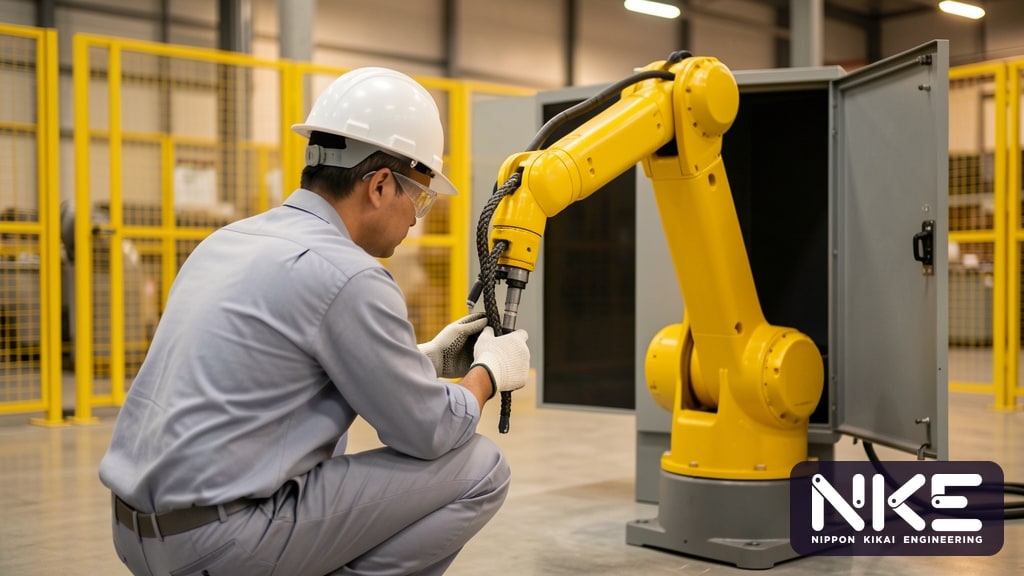
A cobot, short for collaborative robot, is an industrial robot designed to share a workspace with people, provided the application has been risk-assessed. Its defining feature is force or torque sensing in the joints. If the arm contacts a person or an obstacle with more force than the set limit, it stops or backs off immediately. This principle is called power and force limiting.
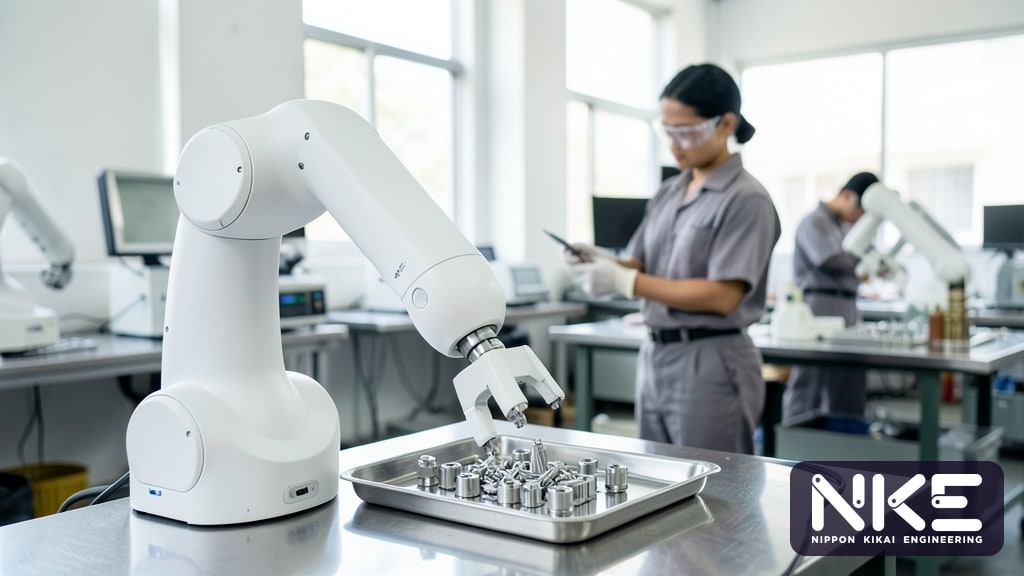
Most cobots also have smooth, rounded arms with fewer sharp edges and pinch points, and many support hand guiding: you physically move the arm to teach a position. This lets technicians with no robot programming background get started quickly. One example is FANUC's CRX series, a range built specifically for collaborative work.
Cobots vs conventional industrial robots
Both are articulated robot arms, but they are designed for different priorities. For a broader overview of robot types, see popular types of industrial robots.
Speed and payload
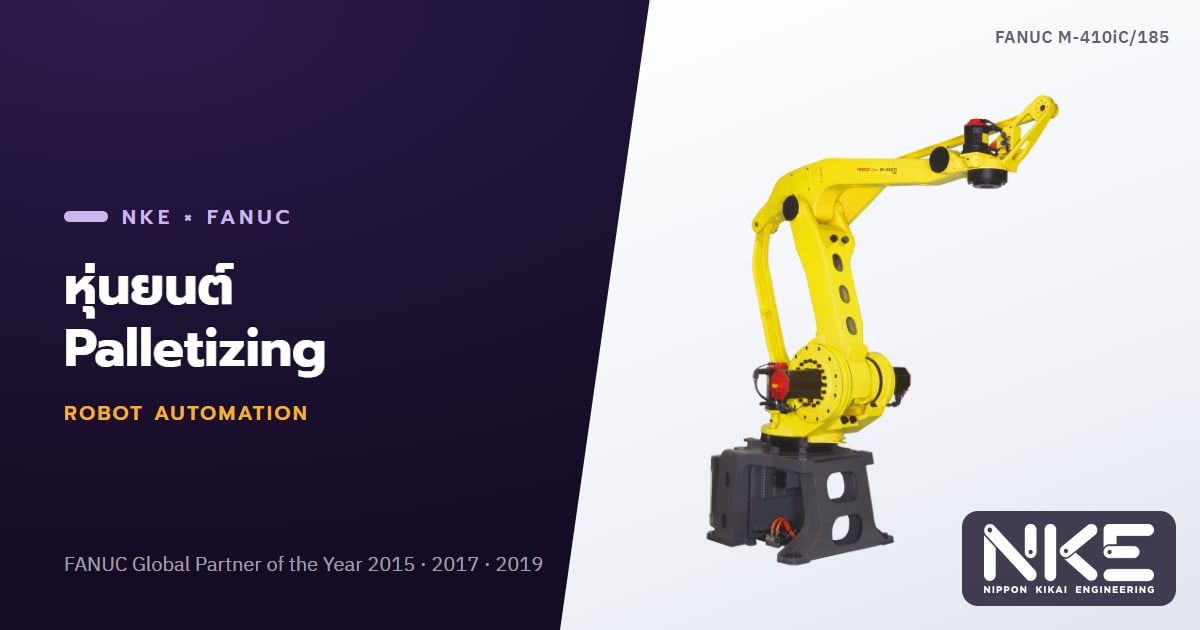
Conventional industrial robots are built for speed and cover payloads from tiny parts to very heavy loads. A cobot running in collaborative mode must keep its speed and force within safe limits, so cycle times are usually longer and payloads typically sit in the light-to-medium range.
Installation and floor space
Conventional robots usually need guarding, interlocked doors or light curtains around the cell. A cobot may allow reduced guarding for some tasks, saving floor space and making it easier to move between machines. The key word is "may": it depends on the risk assessment of the actual application.
Programming
Cobots generally offer simple teach interfaces and hand guiding, which suits plants that change part numbers often. Conventional robots handle complex programs and detailed integration with peripheral equipment, although many current models also offer easier teaching tools.
Which jobs suit a cobot in Thai factories?
Cobots work well where people still need to be nearby, or where a large fenced cell is hard to justify. Typical examples:
- Machine tending of small to medium parts, such as loading and unloading CNC lathes or mills in batches that change frequently
- Assembly and screwdriving, with a person and the robot sharing steps at the same bench
- Vision inspection, holding and rotating a part so a camera can capture several angles
- End-of-line packing and stacking where boxes are light and speeds are moderate
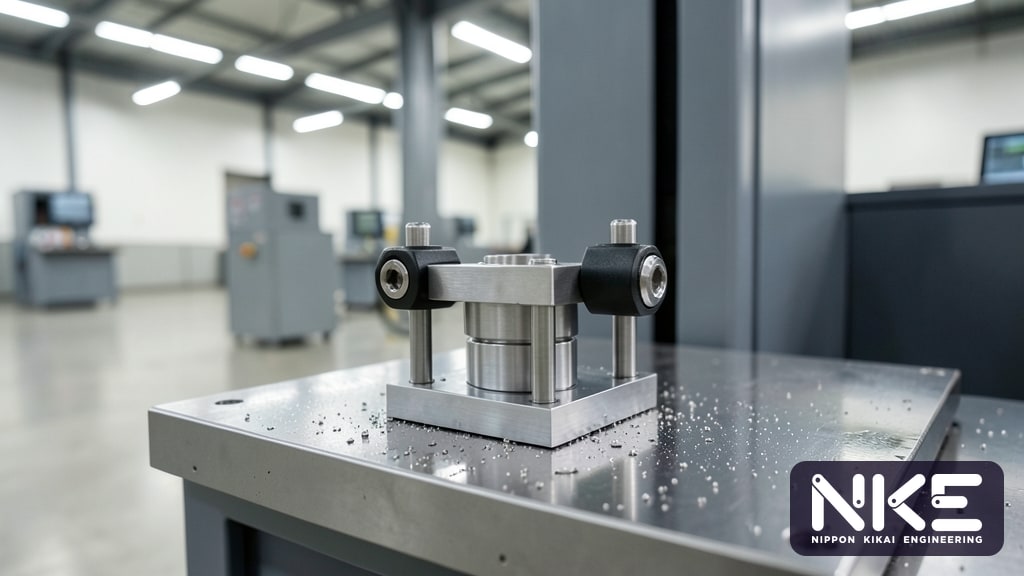
- Precision parts, such as small motor or EV components, where consistent handling reduces marks and human error
From a labour perspective, a cobot is not about replacing everyone. It takes over repetitive loading so operators can move to skilled work such as quality checks, setups or looking after several machines at once. If CNC tending is your main use case, read is a CNC machine tending robot worth it?
Safety: a cobot still needs a risk assessment
The most common misconception is that you can buy a cobot and place it next to an operator straight away. In reality the robot is only one part. What must be assessed is the whole collaborative application, including:
- The gripper and end-of-arm tooling, which may have sharp edges or high clamping force
- The workpiece, which may have burrs, be hot, or be heavy enough to cause injury if dropped
- Pinch points between the arm and the table, machine guards or fixtures
- Speed and motion paths, particularly near an operator's head and neck
The widely referenced standards are ISO 10218 for industrial robot safety and ISO/TS 15066 for collaborative applications. Collaborative operation comes in several forms: safety-rated monitored stop, hand guiding, speed and separation monitoring, and power and force limiting. In many cases, adding an area scanner lets the robot run at full speed when nobody is near and slow down as someone approaches, protecting both people and cycle time.
How to decide: cobot or conventional robot
Work through these questions first:
- How often do people need to be in the robot's space? If rarely, a conventional fenced cell may be the better value.
- What is the target cycle time? If the job demands high speed, a speed-limited cobot may not keep up.
- What is the total weight of the part plus gripper? It must fit within the payload with margin for inertia. See how to choose a FANUC industrial robot.
- How often do you change over? High-mix, low-volume work tends to benefit from a cobot's flexibility.
- Are the parts or tools hazardous? Sharp, hot or heavy items may need so many extra safeguards that the cobot's advantage shrinks.
Common mistakes
- Choosing a cobot because "it needs no fence" without a proper risk assessment
- Expecting the same cycle time as a conventional robot
- Forgetting part presentation, such as trays or conveyors, so the robot keeps waiting for someone to refill it
- Not planning operator training or assigning who owns the system after handover
FAQ
Can a cobot always run without guarding?
No. Whether guarding can be reduced or removed depends on the risk assessment of the whole application, including the gripper, the part, speeds and pinch points. Some jobs still need extra safety devices such as area scanners.
How does a cobot help with labour shortages?
It takes over repetitive tasks such as loading or stacking, so one operator can look after several stations or move to more skilled work, and production can keep running when staff are hard to find.
Are cobots suitable for small factories?
Often, yes. They fit into tight spaces and are relatively easy to teach. Start with one clearly defined station, measure the results, then expand, so you avoid investing more than you need.
If you are weighing up a cobot against a conventional industrial robot for your line, NKE's engineers, as a FANUC Global Partner, can help assess the task, design the cell and plan safety from the start. Explore our factory automation solutions or contact NKE on 02-746-7196 or LINE @nke.th.