Robot Grippers (End Effectors): How to Choose the Right One
Many factories spend weeks choosing the right robot model, then treat the robot gripper, or end effector, as an afterthought. Yet it is the part that actually touches the workpiece, and many shop-floor problems, such as dropped parts, misaligned loading, scratched surfaces or cycle times slower than planned, trace back to it. This guide covers the main gripper types, how to size and select one, and the pitfalls to avoid, so you can have a focused conversation with your system designer.
What a Robot Gripper Is and Why It Matters
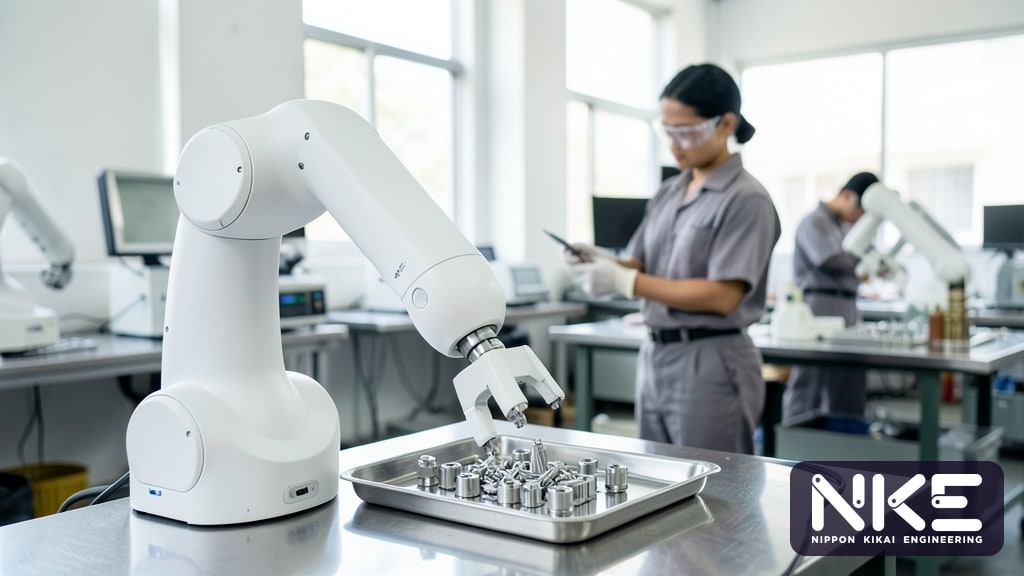
An industrial robot is essentially an arm that carries a tool to a precise position. The real work is done by the end-of-arm tooling, which may be a gripper, a vacuum head, a welding torch or a custom tool. A well-designed gripper lets you:
- Hold the part securely even at high robot speeds
- Place the part repeatably into a fixture or machine chuck
- Avoid damaging finished surfaces
- Handle product changeovers in line with your production plan
A heavy or poorly designed gripper, on the other hand, can force you to slow the robot down or even move up to a larger model.
Common Gripper Types
Finger Grippers
These clamp the part between fingers or jaws. Variants include two-finger parallel, angular and three-jaw grippers, the last being a natural fit for round parts such as shafts and rings. Jaws are usually machined to match the part so that it self-centres as the gripper closes.
- Pneumatic: simple, high grip force for their size and cost-effective, but stroke and force are not easily adjustable.
- Electric: stroke and grip force can be set in software, which suits high-mix work or delicate parts. They generally cost more and deliver less force for their size.
Vacuum Grippers
Best for flat, smooth parts such as sheet metal, glass, cartons or bags. The key variables are cup area, vacuum level and surface condition: porous or oily surfaces reduce holding force. The vacuum can come from a compressed-air ejector or, where flow or leakage is high, a vacuum pump.
Magnetic Grippers
Only suitable for ferromagnetic materials, but useful for steel sheet and irregular shapes. Watch out for residual magnetism in the part and for thin sheets sticking together, which often calls for a sheet-separation device.
Application-Specific Tools
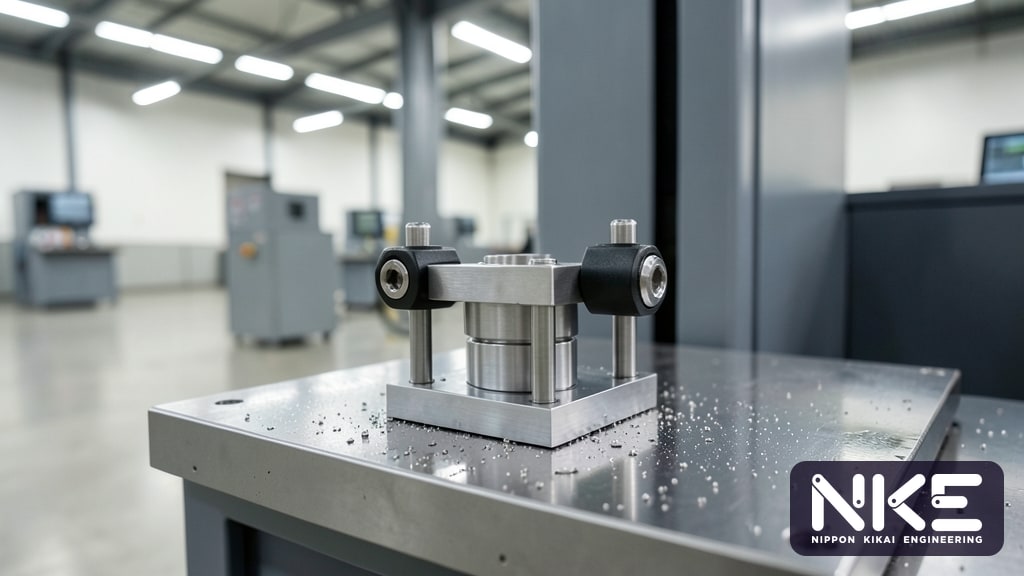
Examples include internal (ID) grippers for sleeve-type parts, and multi-function heads combining fingers, air blow-off and sensors in one unit. These are usually designed together with the fixture; see our article on jig and fixture design and the 3-2-1 principle.
Key Factors When Choosing a Robot Gripper
1. Total Weight and Centre of Gravity
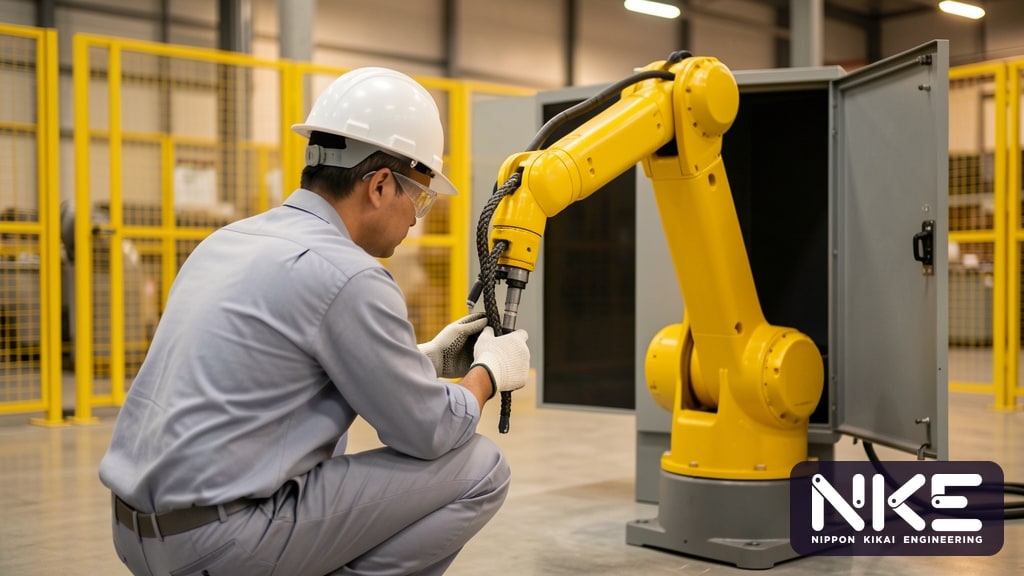
The robot's payload must cover the gripper plus the part, not the part alone. You also need to check the centre-of-gravity offset from the wrist flange and the moment of inertia: a long, overhanging gripper can exceed the wrist rating even if it is not especially heavy. Robot makers publish wrist load diagrams for this check. More detail in how to choose a FANUC robot: payload and reach.
2. Grip Force and Safety Factor
For friction grippers, the force must hold the part not only at rest but also during acceleration and braking. Required force depends on part weight, acceleration, the friction coefficient between jaw and part, the number of fingers and a safety factor. Hypothetical example: switching from flat jaws to profiled jaws that cradle the part means it is held by shape rather than friction alone, which is inherently more secure.
3. Part Geometry, Surface and Variety
- How many part variants are there, and how much do sizes differ? Can one set of jaws cover them?
- Finished surfaces that must not be marked need softer jaw materials such as aluminium or engineering plastics.
- Frequent changeovers may justify quick-change jaws or an automatic tool changer.
4. Environment
Coolant, chips, heat, dust or wash-down conditions all affect service life and drive the choice of seals, protection rating and materials.
5. Loss of Air or Power
Ask the simple question: if air or power drops mid-move, will the part fall? Many pneumatic grippers are available with spring-assisted grip retention or with check valves, and vacuum systems may need a way to hold vacuum briefly.
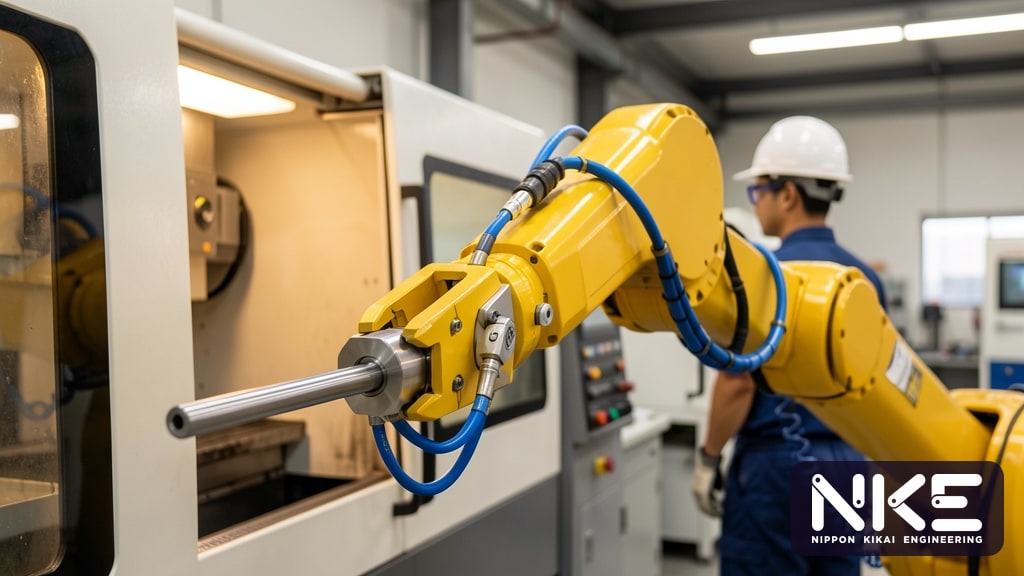
Grippers for CNC Machine Tending
Loading CNC machines has specific requirements worth planning from day one:
- Double gripper: two grippers on one head let the robot unload the finished part and load a fresh one in a single entry, reducing machine idle time.
- Air blow-off: clears chips and coolant from the chuck before loading, so the part seats squarely.
- Status sensors: confirm the jaws are fully open or closed and that a part is actually present before the robot moves on.
- Compliance: a small amount of float helps the part enter the chuck smoothly when positions vary slightly.
If you are evaluating a project like this, read is a CNC machine tending robot worth it?
Common Mistakes
- Forgetting the gripper's own weight, leaving the chosen robot overloaded or forced to run slower.
- Sizing grip force for static conditions only, with no margin for acceleration or emergency stops.
- Using flat jaws on round parts, so the part rolls or slips and placement is not repeatable.
- Skipping confirmation sensors, so the robot carries on without a part and risks a crash.
- Designing only for today's part, so a new variant means building a whole new gripper.
- Ignoring maintainability, making jaw or cup replacement slow and downtime long.
FAQ
Pneumatic or electric gripper: which should I choose?
For one or a few part types needing high grip force, pneumatic is usually sufficient and easy to maintain. If you run many sizes, need fine force control, or compressed air is inconvenient, an electric gripper offers more flexibility.
Can one gripper handle several part types?
Yes, if the shapes are similar and the finger stroke covers the range. When parts differ significantly, a tool changer or quick-change jaws is usually a better choice than forcing one jaw set to fit everything.
Should I design the gripper or choose the robot first?
Do both together. Gripper weight and size influence the robot model, and the robot's reach influences the gripper layout. Looking at the whole cell from the start avoids rework later.
The right gripper is what makes a robot run reliably cycle after cycle. As a FANUC Global Partner, NKE designs and builds grippers, fixtures and complete robot cells. See the scope of our work on the factory automation page, and if you have a part you would like a robot to handle, contact the NKE team, call 02-746-7196 or reach us on LINE @nke.th.