Facing and Centering: The First Step in Shaft Machining
When you machine shafts such as drive shafts, gear shafts or motor shafts, one operation quietly decides the quality of everything that follows: facing and centering. It sets the overall length and the center holes that turning, grinding and inspection all use as their reference. If the center holes are off-axis or the ends are not square, the problem travels all the way down the line. This article explains how facing and centering works, what to specify, the mistakes we see most often, and how to pick the right approach for your plant.
What is facing and centering, and why does it come first?
Facing and centering means machining both end faces of a shaft flat and square, bringing the part to its overall length, and then drilling a conical center hole in each end. From then on, the part is held between centers on lathes and grinders.
There are three good reasons to do it first:
- A common datum. The two center holes define the axis of rotation. Every operation that uses the same axis gets consistent concentricity and runout.
- Length and axial reference. The faced ends become the axial reference for shoulders, grooves and other features.
- A stable starting point. Sawn or forged blanks often have angled, uneven ends. Facing them first lets the next operations cut under stable conditions.
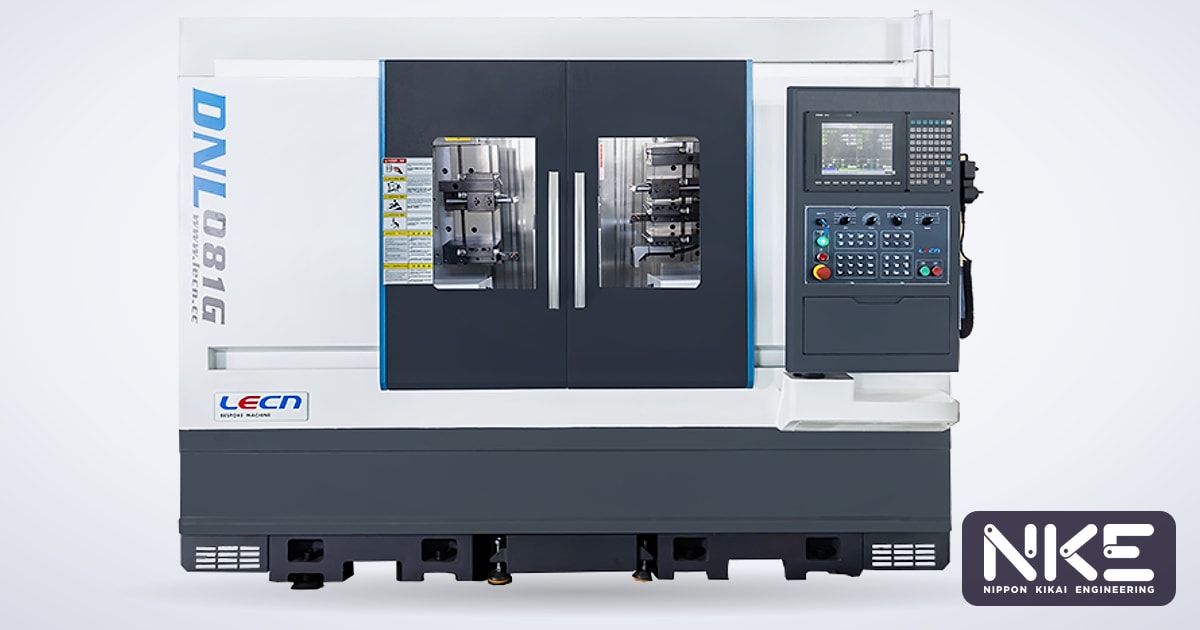
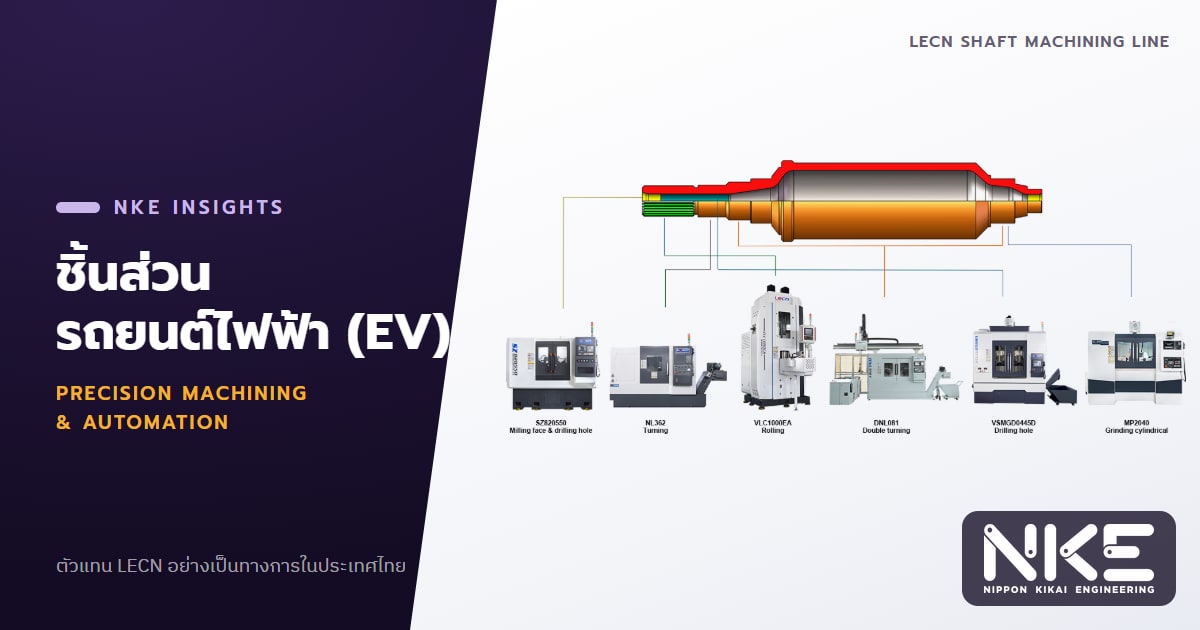
In most shaft lines the next step is turning on a double head CNC lathe or another between-centers lathe, where center hole accuracy shows up directly in the result.
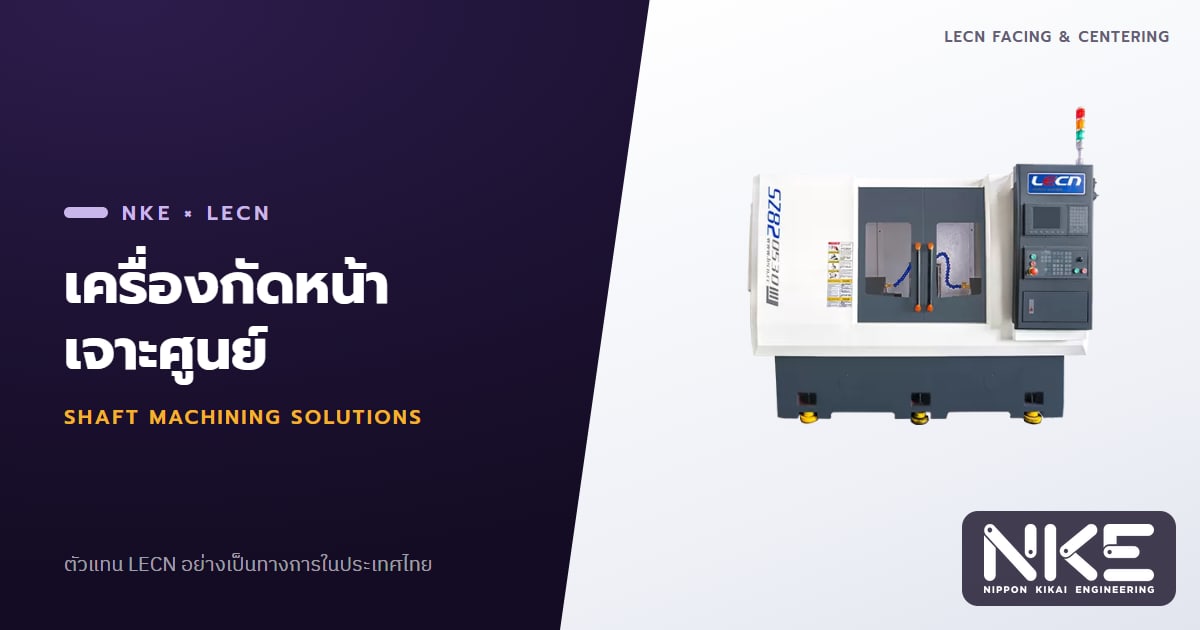
How a facing and centering machine works
A dedicated facing and centering machine is built to work on both ends in a single clamping. A typical cycle looks like this.
1. Clamping on the outside diameter
The shaft sits in V-blocks or self-centering clamps that grip the outside diameter. This ties the center hole axis to the real raw surface of the part, which matters a great deal with forgings whose outside diameter is not perfectly round. It helps spread the stock allowance evenly around the part.
2. Facing both ends
Two milling heads, one on each side, face the ends either simultaneously or in sequence. The part reaches its overall length without being turned around, so there is no error from re-clamping.
3. Drilling the center holes
With the part still clamped, center drills machine the center holes at both ends. Because nothing has moved, both holes lie on the same axis. Depending on the machine design, extra operations such as chamfering or additional drilling can be added in the same cycle.
Center hole types to know before you finalize the drawing
Center holes follow standard forms such as ISO 6411 or DIN 332. Choose the form based on part weight, the forces involved and how many times the holes will be reused.
- Type A is the basic 60° cone, suitable for general work where the holes are not reused many times.
- Type B adds a protective chamfer at the mouth, which guards the edge against knocks and dents. It suits parts that use the center holes across several operations, for example hardening followed by grinding.
- Type R has a curved wall that tolerates slight misalignment between the center and the part better.
- Threaded center holes are used where fixtures need to be attached or the part is lifted through its ends.
Size the center hole to suit the diameter and weight of the shaft. A hole that is too small cannot carry the tailstock load and wears quickly; one that is larger than needed may eat into features on the part drawing.
Common problems in facing and centering
- Center holes not on the same axis. Usually caused by drilling one end at a time and flipping the part, or by worn clamps. The result is excessive runout in turning and grinding.
- Wrong center angle. A worn or incorrect center drill means the live center touches only the edge or part of the cone, causing vibration and poor roundness.
- Chips or burrs in the hole. Even small debris lifts the part off its true axis. Build in a blow-off or cleaning step before every clamping.
- Distortion after hardening. Heat treatment can distort center holes or leave scale. High-precision work therefore often includes center hole grinding before the part goes to the grinder.
- Overall length drifting. Typically traced to an unstable axial locating point or untracked cutter wear.
These faults tend to be discovered late in the process, which makes the root cause hard to find. Checking center holes and overall length at the start of the line pays off.
Choosing a method: general lathe, dedicated machine or automated line
There is no single right answer. Consider your situation:
- Low volume, many part types. Facing and centering on a general CNC machine may be enough, but the part has to be flipped, so clamping must be well controlled.
- High volume, a family of similar parts. A dedicated facing and centering machine works both ends in one clamping for better consistency, and it frees your main lathes for higher-value cutting.
- An automated line. Facing and centering can be the first station in a line linked by a gantry loader or loading robot, feeding lathes and grinders downstream.
Before talking to a machine supplier, gather the part drawing, the diameter and length range, the blank condition (sawn or forged), the required center hole form, your target cycle time and how often you change over between parts. This lets the machine and fixturing be specified to fit the job.
NKE is the official authorized agent for LECN machines in Thailand, including dedicated machines for shaft parts such as facing and centering machines, and can integrate them with automatic loading through our CNC and machine tending solutions.
FAQ
Why not just center drill each end on a lathe?
That works for low volumes, but flipping the part increases the risk of the two holes not sharing an axis, and it ties up your main lathe. For high volumes, working both ends in one clamping usually gives more consistent results.
Can forged blanks with an out-of-round outside diameter be processed?
Yes, this is exactly what these machines are designed for. Clamping on the outside diameter with V-blocks places the center holes so the stock allowance is spread evenly. Check the tolerance range of your blanks with the machine designer first.
Do center holes always need reworking after hardening?
It depends on the grinding accuracy required and the condition of the holes after heat treatment. Parts with tight roundness and runout requirements usually need center hole grinding; for general work, thorough cleaning before clamping may be enough.
If you are planning a shaft line or want more consistent results from your facing and centering step, the NKE team is happy to help, from part analysis to machine selection and automation. Contact NKE, call 02-746-7196 or reach us on LINE @nke.th.